


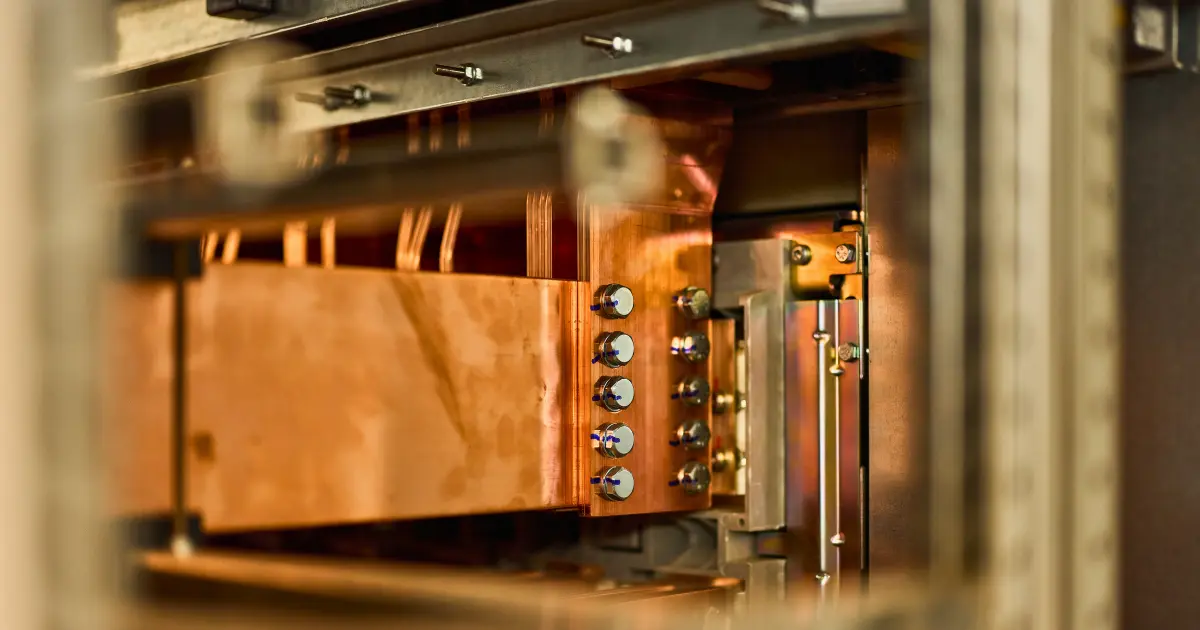

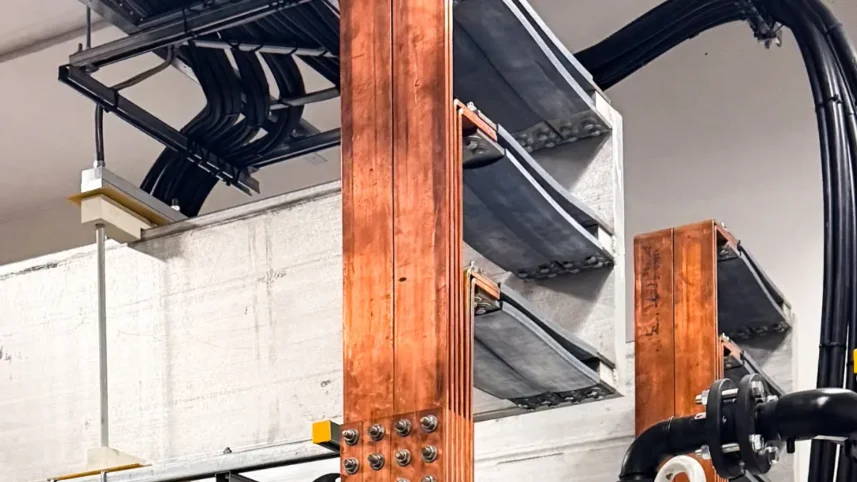
The busbar manufacturing process starts with an approved design, followed by fabrication. Before manufacturing begins, several design decisions need to be made, including conductor material, dimensions, cross-sectional area, intended application and performance requirements. Careful design helps realise the benefits of busbars over traditional cable-and-terminal arrangements, such as reducing cable runs and saving space in an electrical panel. Alongside these considerations, insulation and the choice of surface finish, including any plating, are a key part of the design stage.
Corrosion protection
Electroplating can play an important role in busbar design by protecting contact surfaces from oxidation and corrosion, which increase contact resistance and contribute to joint failure. There are a few finishes that reduce the risk of corrosion particularly in demanding applications, humid and polluted environments.
Nickel plating creates a protective barrier over the busbar resulting in a wear-resistant and tough surface. It even goes beyond this and offers protection in applications where movement, such as sliding, is involved.
Tinning is also another option for busbars providing a strong surface finish for corrosion resistance as well as reliable electrical connections in a wide range of busbar applications.
Connections
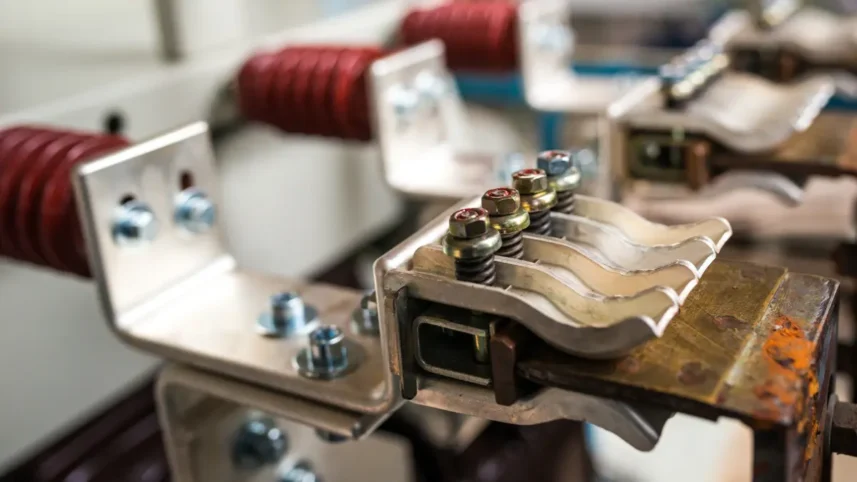
Busbar assemblies and busways have many joints and connection points, and sometimes these connect different metals, which increases the risk of galvanic corrosion. When busbar joints are electroplated, it protects interfaces and maintains joint stability, lowering contact resistance and reducing voltage drop.
Temperature rise
Plating can allow for reliable performance at higher temperature rises in certain applications. An example is silver-plated busbar joints that are used in demanding applications such as switchgear, where stable, low contact resistance is important. Nickel plating is also advantageous at high temperatures as it has a high melting point vs other finishes. It is also used as an underlayer beneath silver to provide a diffusion barrier that helps prevent copper migration into the silver coating.
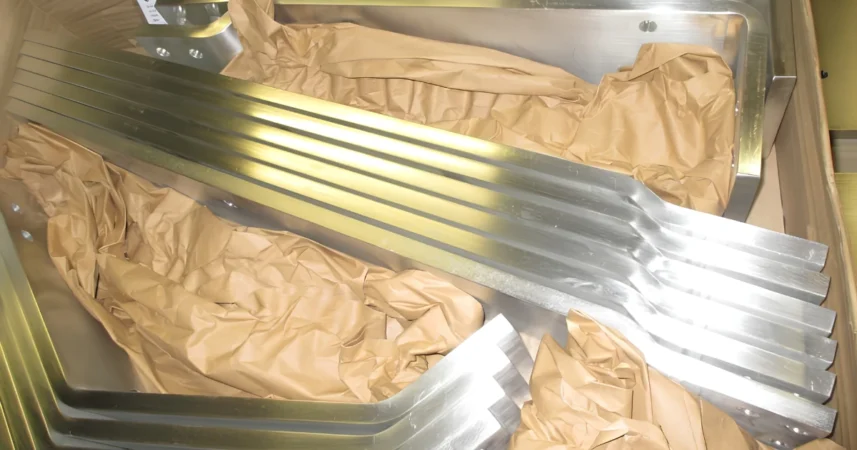
Wide selection of materials
Copper is widely used for busbars. However, aluminium can also be specified, especially when weight advantages and installation are taken into account.
Aluminium naturally forms an oxide layer that protects the underlying metal from corrosion but is electrically insulating. This layer must therefore be managed at electrical contact surfaces to achieve reliable connections. As a result, electroplating aluminium busbars can allow customers and manufacturers to take full advantage of the benefits of aluminium busbars. Silvering provides busbars with a highly conductive contact surface and helps maintain low contact resistance.
Design
Plating should be considered at the busbar design stage so that the finish, coating thickness, areas to be plated and any masking requirements can be included in the drawing or specification.