



Improve tarnish resistance, corrosion performance and electrical conductivity on your brass parts with our wide range of electroplating processes from a specialist with over 70 years’ experience
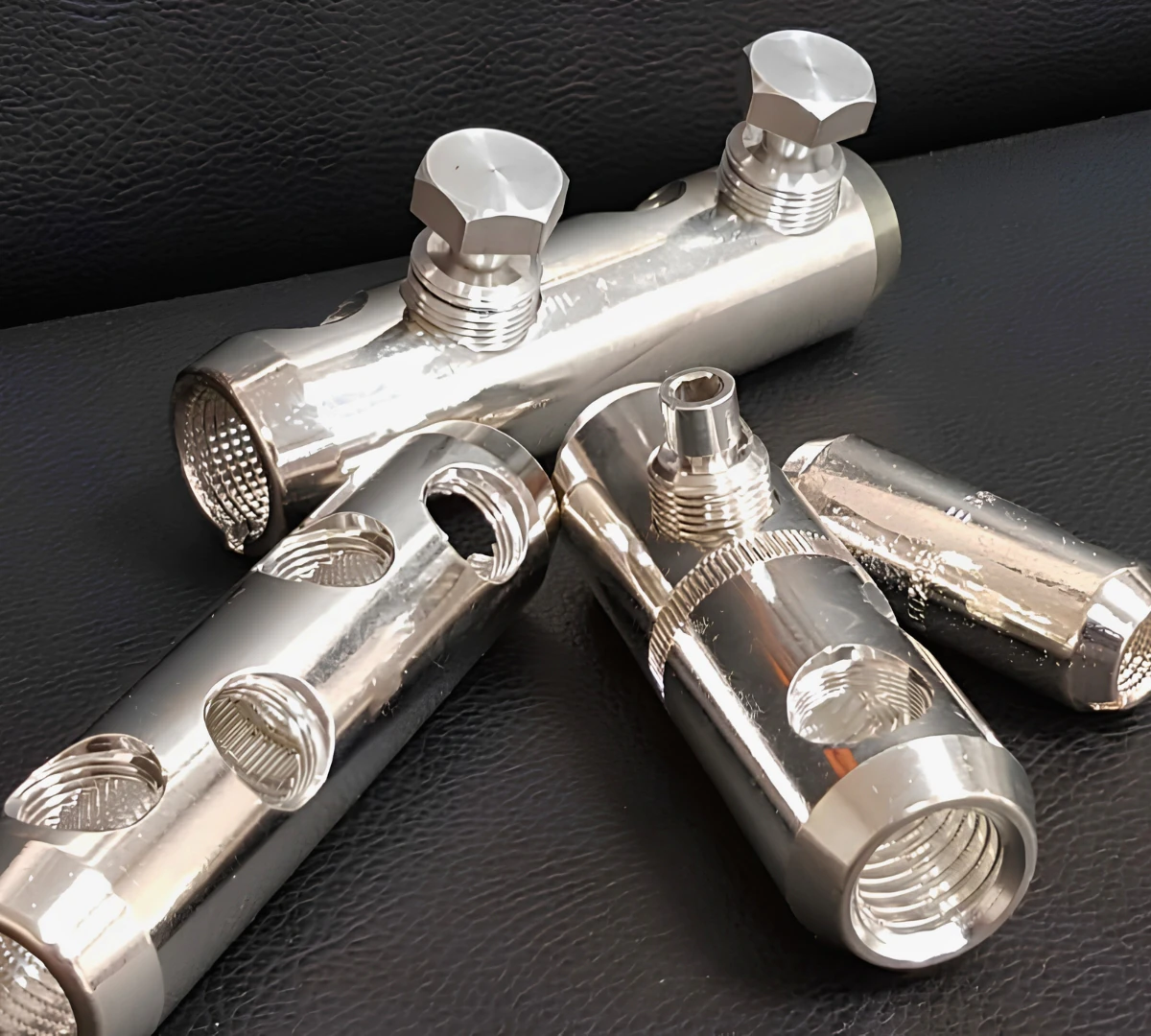
What Is Brass?

Brass is an alloy made up of copper and zinc, typically around two-thirds copper and one-third zinc, though proportions vary widely to achieve different mechanical, electrical and aesthetic properties. As an alloy, it may also contain additions of lead (for machinability), aluminium (for strength and corrosion resistance), manganese, tin or silicon etc
We offer electroplating services for brass parts such as:
- Ammunition and defence components
- Automotive components
- Brass sheets
- Bolts, Nuts and Washers
- Brass Busbars
- Brass Shims
- Contacts
- Connectors
- Fasteners and fittings
- Marine components
- Heat sinks
- Screws
Why plate on Brass?
Brass is one of the most widely used copper alloys in industrial components, valued for its inherent corrosion resistance, durability, relatively low melting point and low‑friction behaviour in moving assemblies.
However, in demanding environments, electroplating brass is a highly effective way to further improve corrosion and wear resistance, enhance electrical performance, and tailor the surface finish to specific application requirements.
Benefits of plating on brass
Electroplating extends those limits by adding a functional surface layer that addresses the specific weakness your application exposes. The right coating, properly applied, delivers:
Corrosion and tarnish protection
Barrier coatings that prevent oxidation, dezincification and environmental attack.
Enhanced conductivity and solderability
Stable, low-resistance contact surfaces with reliable solder wetting.
Wear resistance
Harder surface layers for mating cycles, sliding contact and high-load applications.
Performance in harsh environments
Enabling brass to operate reliably alongside noble metals without galvanic degradation.
Metal Coatings for Brass Substrates
We offer a range of electroplating finishes tailored to the specific challenges of plating onto brass. Each process is designed around the substrate, because brass behaves differently from steel or aluminium, and the coating system needs to account for that.
Silver Plating
Silver plating is the go-to for high-conductivity brass contacts, busbars and connectors.
We plate with 99.9% pure silver at thicknesses of your choice, giving you reliable, low-resistance contact surfaces for both power and signal applications.
Nickel Plating
For most brass applications, we recommend electroless nickel plating as it deposits uniformly regardless of part geometry, making it ideal for complex shapes with recesses, blind holes and internal features that electrolytic nickel struggles to reach evenly.
Electroless nickel also provides excellent hardness, corrosion resistance, and wear resistance. It’s widely used for valve bodies, fittings, and sliding components where brass alone would wear too quickly.
Copper Plating
Copper plating serves two important roles on brass. As a standalone finish, it provides an excellent surface for subsequent soldering or brazing operations. More commonly, copper acts as a critical barrier underplate beneath tin, silver or gold, blocking zinc diffusion from the brass substrate into the top coat.
Our copper plating processes are designed for strong adhesion to brass without peeling or blistering. Proper activation and strike sequences are essential on brass, and we’ve refined these over decades of production work.
Tin Plating
Tin is a cost-effective finish that enhances solderability, provides moderate corrosion protection and offers good electrical and thermal conductivity. It’s widely specified for connectors, fasteners and components that need reliable solder joints.
Tin plating on brass requires particular care; without an undercoat layer, tin can leech onto the brass surface over time, causing the finish to discolour, go black and lose both its conductivity and its appearance. We routinely apply a copper or nickel undercoat to prevent this, it’s one of the most important process decisions when plating tin onto brass, and one that less experienced platers sometimes overlook.
Gold Plating
Gold plating delivers the highest conductivity and lowest contact resistance for mission-critical applications: aerospace connectors, medical devices and high-reliability electronics. Gold’s resistance to oxidation means contact performance stays stable over thousands of mating cycles and across wide temperature ranges.
As with silver, we use barrier underplates on brass to prevent zinc diffusion into the gold layer. We can plate selective areas to control costs gold only where the contact function demands it, with masking to protect adjacent surfaces.
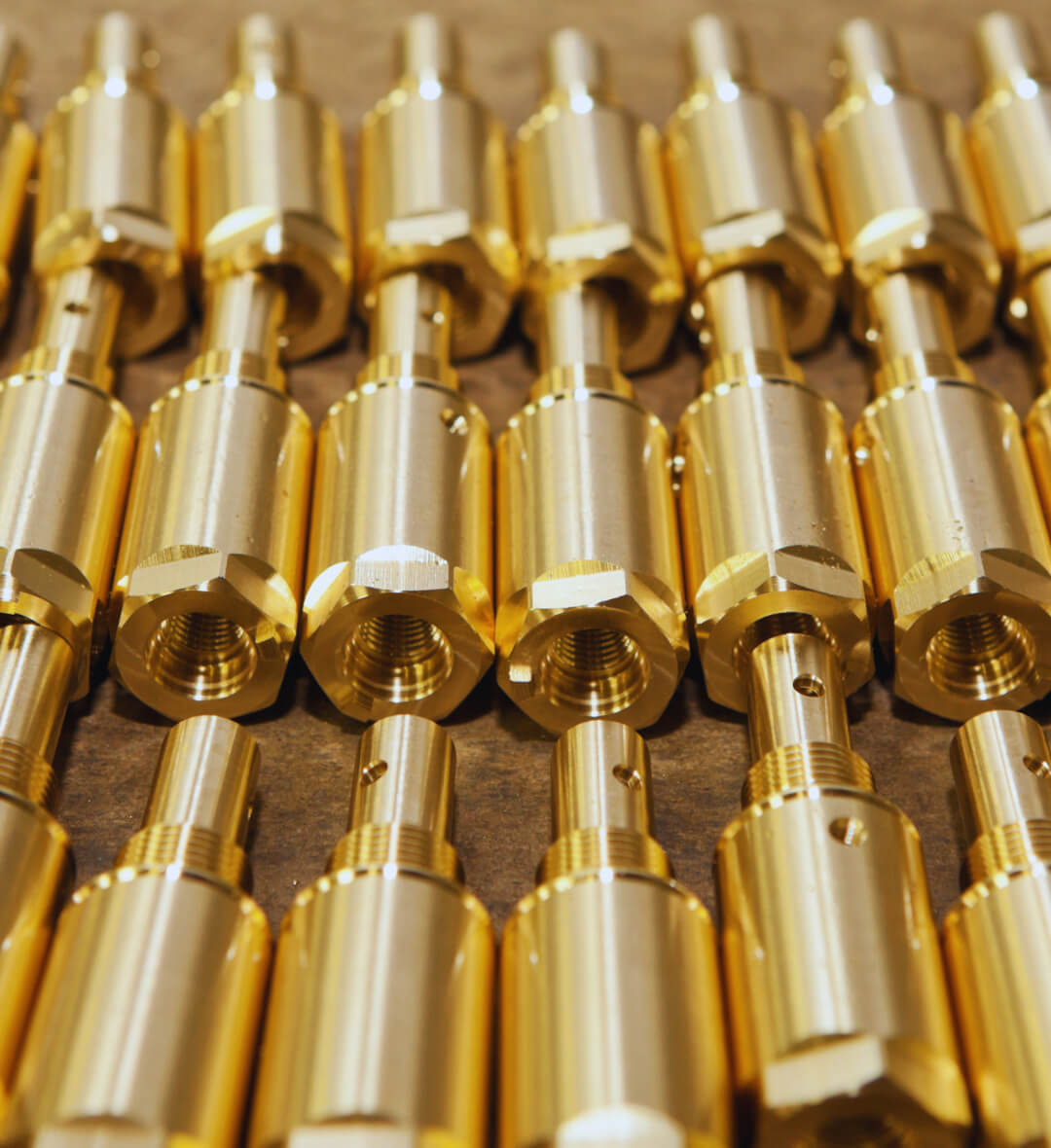
Preparing and Plating Your Brass Parts
Experiencing These Problems with Your Brass Parts?
If you’re seeing any of the following issues with your brass components, electroplating is likely the answer:
Tarnishing and discolouration
Brass reacting with moisture, chlorides or ammonia, forming copper sulphide films that darken over time.
Early corrosion or dezincification
Zinc leaching from the alloy, leaving porous, weakened copper behind, especially in marine or high-chloride environments.
Poor or degrading electrical contact
Rising contact resistance as oxide layers build on unprotected brass surfaces.
Solderability failures
Zinc diffusing to the surface and preventing clean solder joints, a common issue with aged brass connectors.
Inconsistent appearance across batches
Colour variation, water staining or fingerprint marks on visible components.
Galvanic corrosion in mixed-metal assemblies
Brass in contact with more noble metals like silver or stainless steel, accelerating degradation.
Surface Preparation for Brass Plating
Brass requires its own cleaning and activation chemistry. Using copper cleaners on brass, for example, can attack the zinc component of the alloy and create adhesion problems downstream. Our preparation processes are formulated specifically for brass substrates.
What’s the difference between brass plating and plating on brass?
At Karas Plating, we offer electroplating processes for brass components, applying another metal (silver, gold, nickel, copper, tin) onto your brass components to improve their performance. Brass plating is the opposite, applying a thin layer of brass onto another metal to give it a brass appearance.
If you’re not sure which you need, just tell us what your base metal is and what finish you want. We’ll specify the right process for your application.
Why Choose Karas Plating for Your Brass Components
Over 70 years of electroplating experience.
We’ve been refining our processes since the 1950s. Brass is one of the substrates we plate most frequently, and our process parameters, bath chemistries and preparation sequences for brass are well established and tightly controlled.
Specialist brass knowledge.
We understand zinc diffusion, underplate selection, alloy-specific activation and the common failure modes that catch less experienced platers out. We’ll help you specify the right coating system — not just plate what you ask for without question.
Capacity for any volume.
Our 24-hour facility operates automated plating lines for high-volume barrel work alongside bespoke jig plating for larger or more delicate components. We handle everything from prototypes and first-article runs to ongoing production.
Full quality system.
Certified to ISO 9001, ISO 14001 and ISO 45001, fully RoHS and REACH compliant. Every batch ships with a Certificate of Conformity including thickness data and test results. We welcome customer audits and site visits.
Get a Plating Quote for Your Brass Components
Send us your part drawing and tell us your base alloy, the finish you need and the volumes you’re looking at. We’ll come back with a recommendation and a quote.