


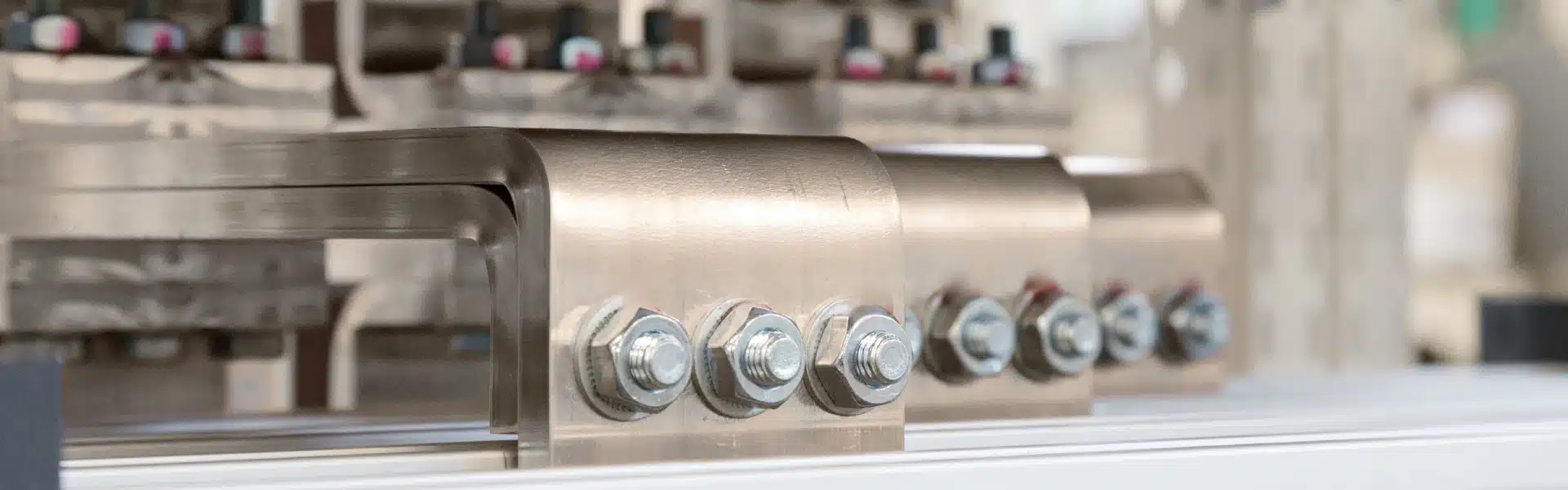
Tin plating of copper busbars
Tin plating is one of the most popular metal finishes for copper busbars, and in this article, we will explain by discussing the various qualities tin plating provides to busbar manufacturers.
Tin plating, also called tinning, is the process of applying a thin tin coating to copper busbars to improve corrosion resistance, solderability, and electrical contact performance, i.e. to help maintain low, stable contact resistance at joints.
Copper busbars are used in any industry where the efficient conduction of electricity is of paramount importance. As more and more sectors require these crucial components, including power generation and distribution, electric vehicles, telecommunications, streaming services, internet providers, and more, businesses are always in need of a cost-effective solution that delivers exceptional results.
What is the tin plating of busbars?

Tin plated copper busbars are busbars that have been coated with a layer of tin, providing additional protection against corrosion. They are instrumental in the production of high-quality components like switchgear, panels, and electrical conductors.
Tinned copper flat bar

Tinned copper flat bars are high-conductivity conductors used where reliable current distribution, earthing or electrical connections are required. They are commonly used in switchgear, control panels, data centres, electrical infrastructure and other high-current applications. The bars can be supplied in a range of sizes and then cut, drilled or bent to suit the finished component. Putting the bars through the copper busbar tinning process after fabrication means the tin coating is applied once the bar has been made to drawing, helping to protect exposed cut edges, drilled holes and formed areas.
Benefits of Tin Plating for Copper Busbars
Tin plating offers several measurable benefits to its end users. With the increase in production of electric vehicles and renewables like solar panels, we have seen an increase in the demand for cost effective coating solutions and see tinning as one of the most viable options available for this use case. These are some of the popular benefits:
Improved solderability
Dull tin plating flows effectively during the soldering process to help create more reliable and durable solder joints. This is of key importance when connecting elements of an electrical system with copper busbars.
Improved protection against corrosion
Tin is naturally resistant to corrosion, making it a good protective coating for copper busbars, particularly if they are employed in environments that have high humidity. Left unplated, copper tarnishes and its contact resistance rises over time – read more about copper busbar oxidation and why plating prevents it.
Stable Electrical Contact
Tin protects the copper surface from oxidation, helping to keep contact resistance low and stable at bolted and clamped joints. The thin tin oxide that forms is easily broken under contact pressure, so connections stay reliable over the life of the busbar.
Reduced Wear
When two metal surfaces come in contact with each other, they can experience wear and tear. This can cause small pieces of metal to break off, leading to decreased performance and efficiency, as well as increased friction. This phenomenon is known as galling. However, if bus bars are coated with tin, this can be prevented.
Cost
There are big cost savings to be had by opting for tin plating of your busbars as tin costs less than other finishes like gold and silver whilst still providing good corrosion protection and contact performance for many applications. For a detailed breakdown of what affects pricing, see our guide to how much busbar plating costs.
Bright Tin Plating vs. Dull Tin Plating
Tin plating solutions come in two major varieties: bright and dull, each of which has its own unique advantages.
Bright tin plating
Bright tin plating is used extensively when the conductivity, corrosion resistance, and lubricity of the busbar are most important. It provides a lustrous finish that is cosmetically pleasing, but it’s the technical and practical advantages that make it so appealing. If you intend to solder your busbars to various connectors in your system, bright tin plating is not recommended, as the organic brighteners used in the process make the solder joints less durable, risking a shorter shelf life.
Dull tin plating
Dull tin plating (also known as matte tin plating or solderable tin plating) enjoys the same improved corrosion resistance and conductivity as its bright tin counterpart, while also offering enhanced solderability for more durable and effective connections. Because of its coarse grain structure, it lacks the lubricity of bright tin plating and is best applied over a base layer of nickel plating for optimal efficiency. For copper busbars, nickel underplating followed by tin plating is necessary where the tin needs protection from interaction with the base metal, particularly at higher temperatures or in demanding electrical environments. This makes for durable, solderable busbars.
Tin Plating Your Copper Flat Bar
We tin plate copper flat bar whether it arrives in stock lengths or has already been fabricated, so fabricators, copper suppliers and electrical contractors can send whichever suits the job, and we will return them as tinned copper flat bar, plated to your specification and ready to install. You can choose full tin plating over the whole bar, or selective plating on just the ends, connection faces and other contact areas.
Tin plating busbars cost
Customers often choose Karas because not only do we offer busbar tinning, we can also plate busbars with a wide variety of metals, including silver, gold, nickel, and combinations, to meet different performance requirements. The selection of plating processes depends not only on cost, but also on the application’s specific needs, such as electrical conductivity, corrosion resistance, wear resistance, and solderability. For example, silver offers top conductivity but is expensive, gold provides maximum corrosion resistance for critical contacts, nickel excels in harsh environments, while tin provides an economical choice with good corrosion protection and solderability. If you’re unsure which plating suits your application, we can help you find the ideal solution. For a breakdown of what affects the price of tin plating, see our guide to how much tin plating costs.
Frequently asked questions
Is it the same as a tin-plated busbar?
Yes. Tinned copper flat bars are also known as tin-plated copper busbars, particularly when the bars are used for electrical power distribution.
Why tin-plate a copper busbar instead of leaving it bare?
You can use a tinned copper busbar instead of leaving it bare where improved corrosion resistance, long-term surface protection and reliable electrical contact performance are required. Tin plating can also help reduce galvanic-corrosion risk at copper-to-aluminium interfaces when used as part of a properly designed connection. However, this will depend on your specification.
Tinned bars or silvering?
Tinning can be a more cost-effective alternative to silver plating for many low- and medium-temperature applications. Nevertheless, silver plating may still be specified where exceptionally low contact resistance, higher temperature capability or demanding high-current duty is required.
Can you tin bars that are already cut and drilled?
In most cases, it is better to tin-plate copper bars after they have been cut, drilled, punched or bent to their final shape. This allows the plating to cover the finished component, including cut edges and the inside of drilled holes, where the specification calls for full coverage.
Cutting or punching a bar after it has been plated can expose bare copper at the newly machined edges. Those areas can oxidise more quickly, which may affect corrosion resistance and contact performance, particularly in damp or corrosive environments.
Fabrication after plating can also scuff, crack or thin the coating, especially around bends and punched holes. It may leave sharp burrs that create handling risks, damage insulation or lead to uneven plating coverage on any areas that are reworked.
What tin thickness do you plate?
We plate to our customers' specifications, which means anything from a flash to 50+ microns depending on the use case.
Do you offer Bright or matte tin plating?
We provide both Bright Tin Plating and Dull Tin Plating (also known as matte tin plating). Bright tin plating produces a shiny, reflective finish and is often chosen where appearance, smoothness and good electrical contact performance are important. Like other tin deposits, it can provide effective corrosion protection when the coating specification is matched to the component and its operating environment.
Dull tin plating provides a matte, non-reflective white finish. It is commonly specified for electrical and electronic components requiring strong solderability, as it contains fewer organic brighteners than bright tin. Dull tin is also often selected where lower whisker risk is required, although whisker mitigation depends on the full plating specification and application conditions. Find out more about the differences here.