




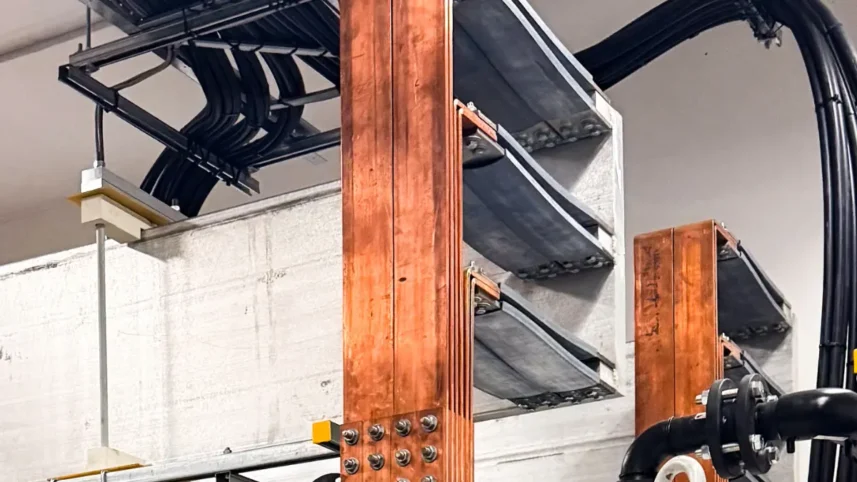
Copper busbars are metal strips or bars made from copper and used in a wide range of electrical power applications. Although copper busbars offer excellent conductivity and mechanical performance, the exposed copper surface can oxidise with the surrounding environment and develop surface films over time.
What is oxidation?
Oxidation is an electrochemical process in which copper reacts with oxygen and moisture in the surrounding environment. Depending on the service conditions, copper can form oxide films and, in more aggressive or contaminated environments, other corrosion products involving sulphides, chlorides or carbonates.
On copper busbars, you will normally see this through a change in appearance. For example, in early stages, the copper may become dull, brown, darkened or blackened. Long-term, in severe or prolonged damp and contaminated environments, you will likely see a green-like film appearance.
What problems can copper busbar oxidation cause?
Whilst you may think oxidation only affects the appearance of the busbar, the effects can go beyond this. Usually, electrical performance at interfaces such as bolted joints, terminals and connection points is affected by oxidation. This can create problems in applications that rely on dependable low-resistance connections, including data centres, automotive systems, power distribution equipment and EV charging infrastructure. Some of the problems caused by copper busbar oxidation include:
Increased contact resistance
When a copper busbar oxidises, it forms a surface film on the exposed copper. This film does not usually have a major effect on the bulk conductivity of the copper bar itself, but it can significantly affect contact performance at joints and interfaces by increasing contact resistance.
Connections and joints
Joints and connections can be especially affected by oxidation; higher contact resistance at these points can create localised thermal hot spots, which increases the risk of overheating, reduced reliability and potential joint failure.
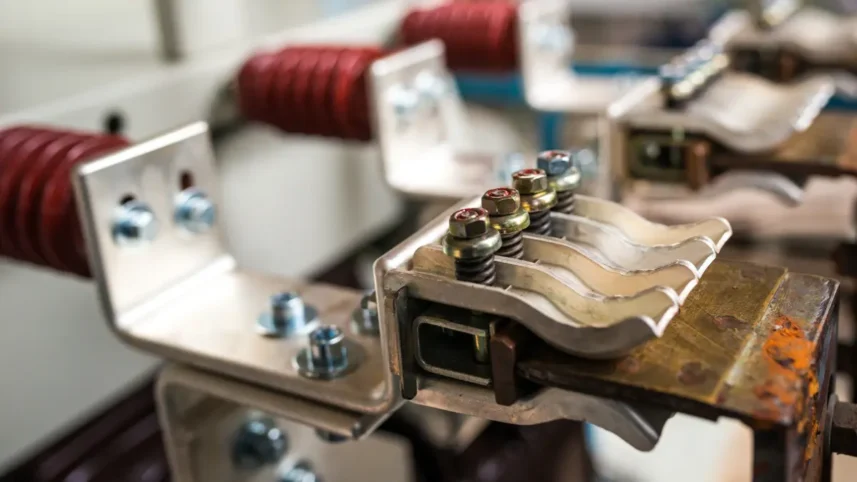
We have seen this in practice on copper busbars that were used to carry current around an anodising plant. The sections exposed to the atmosphere became visibly green and corroded over time, while the mating surfaces protected inside the joints remained clean when the connections were taken apart. This is a simple example of how atmospheric exposure can attack bare copper and why oxidation at contact areas can lead to poorer electrical connections.
How to reduce the risk of copper busbar oxidation
One of the main ways to reduce oxidation risk in copper busbars is through surface treatment. Plating places another metal over the natural copper surface, reducing its direct exposure to the atmosphere. This can help extend the life of the bar and provide a more suitable electrical contact surface, depending on the application, environment and joint design. This is one reason copper busbars are commonly specified with a plated finish rather than being left as bare copper.
Nickel plating
For example, plating a layer of nickel onto the copper bar can provide a hard-wearing barrier layer that helps protect the copper from the surrounding environment and significantly reduce the rate at which the underlying copper oxidises. Nickel can also be used as a thin flash or undercoat beneath another finish, such as silver, helping to keep the copper and the top plated layer separated. Nickel on its own can improve protection, while using it beneath a further plated finish can provide an additional protective layer.
Tin plating
Another effective process is tin plating; it is widely used on copper busbars because it offers good corrosion resistance, excellent solderability and reliable contact performance in correctly designed and assembled electrical joints. A nickel flash can also be used beneath a top coating such as silver where a barrier layer is required.
Other finishes
Other finishes that can help reduce oxidation-related problems include silver plating, which is often selected where very low and stable contact resistance is required, or a combination of plating processes such as nickel and tin where a barrier layer is also needed. The thickness specified for each finish depends on the application, the standard being worked to and the environment the bar will operate in.
Talk to our team about protecting your busbars
For more information about copper busbar plating, please get in touch with us. Many of our customers already come to us with a specified plating process, coating thickness or standard that they need us to work to. However, if you are considering electroplating as a way of protecting copper busbars against oxidation, our production team can also discuss the options available and the practical considerations involved.
We have many years of experience in plating busbars, including surface preparation, stripping and cleaning existing coatings, replating and overcoming some of the common problems that can occur during the plating process. We can also provide quotations and lead times for your requirements.