


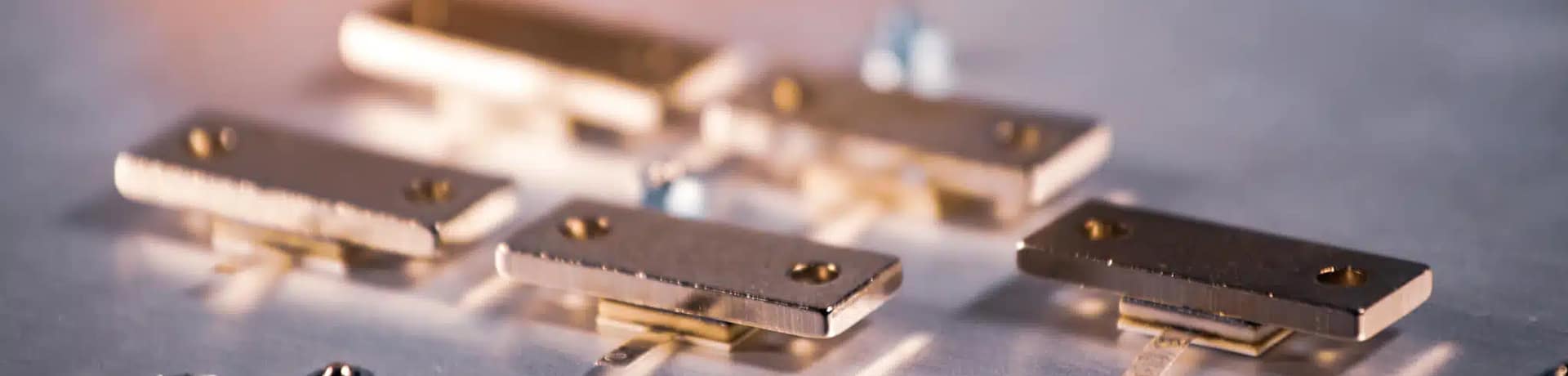

Busbars are used in electrical distribution systems, switchgear and other applications where reliable electrical connections are essential. Copper and aluminium are the most common base materials, but a busbar’s surface finish is also an important consideration.
Silver and tin plating are frequently specified for busbars, providing a protective surface and helping to maintain the condition of electrical contact areas. In some specifications, a nickel underlayer is applied between the base metal and the final silver or tin coating.
What Is a Nickel Underlayer?

A nickel underlayer is a thin coating of nickel deposited onto a component before the final finish is applied. In busbar plating, it may be used beneath silver or tin as part of a multi-layer electroplating specification.
The nickel does not form the exposed surface. A plated copper busbar with a nickel underlayer has three layers:
- Copper substrate: the base material providing the main electrical conduction path.
- Nickel underlayer: an intermediate coating separating the copper from the outer finish.
- Silver or tin plating: the exposed coating specified for the component’s application.
Why Are Nickel Underlayers Used?
Acting as a Diffusion Barrier
The main reason for using nickel beneath silver or tin is its ability to act as a diffusion barrier. Over time, and more quickly at elevated temperatures, atoms from the substrate and the coating can migrate across the interface between the two metals. This can change the composition and behaviour of the plated layers. A nickel underlayer helps restrict this movement by separating the copper substrate from the final coating.
The effects of diffusion differ between silver and tin, and these are covered in the sections below.

Separating the Base Metal From the Final Finish
Nickel also creates a physical separation between the substrate and the exposed coating. This can be useful where direct interaction between the two metals is undesirable, or where a coating system has been specified to meet particular environmental or manufacturing requirements.
Nickel has corrosion-resistant properties of its own, but the performance of the complete system depends on coating thickness, porosity, exposure conditions and component design. The underlayer is one part of the overall surface treatment, not a substitute for choosing a suitable final finish.
Nickel Underlayers in Silver Busbar Plating
Silver plating is used on busbars where its conductive and contact properties are required.
When silver is deposited directly onto copper, copper can diffuse through the silver over time, particularly at elevated temperatures. Copper that reaches the surface can oxidise, which may discolour the finish and affect the contact surface. A nickel layer between the copper and silver helps limit this migration.
Silver deposited over nickel depends on correct surface activation to achieve good adhesion, so the full process needs to be specified and controlled.
Nickel also has a higher electrical resistivity than silver or copper. For electrical contact applications, the effect of the complete coating system needs to be considered, rather than assuming an additional layer will always be beneficial.
Nickel Underlayers in Tin Busbar Plating
Tin plating is commonly used on copper busbars and electrical connectors where a tin contact surface is specified.
When tin is plated directly onto copper, copper-tin intermetallic compounds form at the interface. These develop over time, and temperature influences how quickly they grow.
Intermetallic growth is also associated with tin whiskers: fine, hair-like metallic growths that can form on tin surfaces. As copper-tin compounds grow into the tin layer, they can create compressive stress in the coating, which is recognised as a contributing factor in whisker formation. A nickel underlayer limits copper diffusion into the tin and is commonly used to help reduce this risk. Finish type is also a factor, as explained in our comparison of bright and dull tin plating.
For more on nickel-tin as a coating system, see Nickel and Tin: An Economical Busbar Plating Process.
Nickel Underlayers for Aluminium Busbars
Aluminium presents different plating challenges to copper because it rapidly forms an oxide layer when exposed to air. Surface preparation is therefore critical, and aluminium busbars typically require specialist pretreatment before electroplating.
On aluminium, nickel is often part of the plating system itself, providing an adherent, uniform surface for the final silver or tin coating. Karas Plating offers specialist aluminium busbar plating, including nickel-silver and nickel-tin multi-layer finishes.
Does Every Silver or Tin Plated Busbar Need a Nickel Underlayer?
No. Silver and tin are applied directly to suitably prepared copper busbars in many applications. A nickel underlayer may be considered where the specification calls for diffusion control, a particular multi-layer structure or compatibility with the substrate.
Factors that influence the decision include:
- Substrate material: copper and aluminium have different preparation and plating requirements.
- Final coating: the diffusion behaviour of silver and tin on copper differs.
- Operating temperature: higher temperatures accelerate diffusion at coating interfaces.
- Electrical requirements: the added resistance of the nickel layer may need to be accounted for.
- Plating thickness: each layer may need to meet its own thickness requirement.
The final plating system should be set by the manufacturer’s requirements and any applicable standards.
Specifying Nickel Underlayers for Busbar Plating
For manufacturers sourcing silver or tin busbar plating, it is useful to confirm at the specification stage if a nickel underlayer is required.
Technical drawings and plating specifications should identify:
- the substrate material
- each coating layer required
- the thickness of each layer, not just the overall coating thickness
- any areas that must remain unplated
Specifying thickness per layer matters because each layer performs a different function. X-ray fluorescence (XRF) testing can measure the individual layers of a multi-layer finish, and Karas uses X-ray testing to verify plated deposits. Our guide to busbar plating thickness explains what sets the right thickness for an application.
Early discussion with the plating provider can also identify practical considerations relating to component dimensions, surface preparation and processing.
Nickel Underlayers for Silver and Tin Busbars at Karas Plating
The suitability of a nickel underlayer depends on the complete coating system and the conditions the finished busbar will operate in.
Karas Plating provides specialist busbar electroplating for copper and aluminium components, including silver, tin, nickel and bespoke multi-layer finishes. Our team can review your drawings and plating requirements and discuss the processes available.
Submit your drawings or contact Karas Plating to discuss your silver or tin busbar plating requirements.