


How Much Does Nickel Plating Cost? (UK Price Guide)

The cost of the nickel plating process varies as it depends on a range of factors such as surface area, quantity, coating thickness (microns), the base material, and whether electrolytic or electroless nickel is specified. One-off jobs typically carry a minimum batch charge of around £350. We always recommend submitting a drawing or giving us a call for an accurate nickel electroplating price; we respond to quote requests within 24 hours. This quick guide explains the factors that affect nickel plating costs, so you know what to expect and how to get an accurate quote.

What factors affect the cost of nickel plating?
The size of the base metal has an effect on the coat because we look at the surface area and how much of the material needs to be plated. We also take into account what area needs to be plated and whether other areas needs to be masked etc
Size and surface area
Plating is priced on the surface area to be coated, not the weight of the part. We look at how much of the component needs plating, and whether any areas must be masked off (masking is a manual process and adds labour cost).
Rack plating vs barrel plating
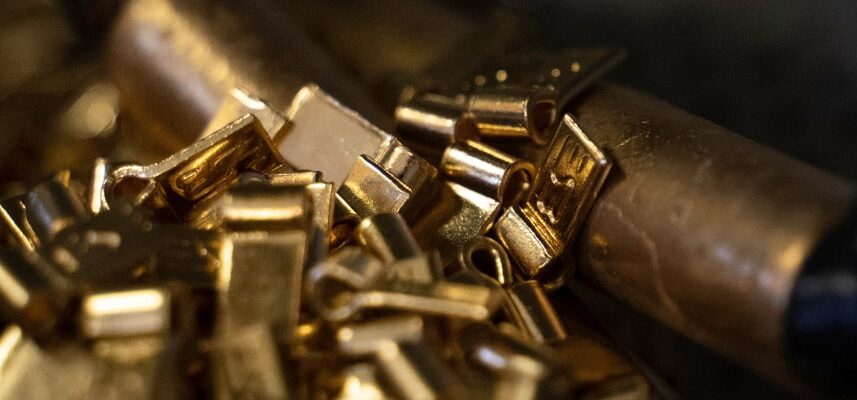
Size of components influences how parts are processed, which affects the price. For example, small components (fasteners, terminals, pins) can often be barrel plated in bulk at low per-part cost. Larger, delicate, or cosmetically critical parts must be individually jigged on racks, which takes skilled labour and reduces how many parts fit in the tank per run.
Quantity
A one-off or small batch carries a minimum order charge, typically around £350, because the setup, jigging, and process control are the same whether we plate one part or one thousand. At higher volumes (hundreds or thousands of parts) the per-part cost is smaller.
Coating thickness (microns)
Plating thickness (measured in microns) influences the price of nickel plating. Thickness influences factors like how long parts stay in the tank and the amount of nickel deposited, so a 50 micron coating costs more than a 5 micron flash.
It is important to remember that sometimes the microns end up being dictated by the application, regulation, customer requirement, or the specification on your drawing (for example, a corrosion resistance or wear requirement).
The base material
Your substrate affects surface preparation, which affects cost:
- Nickel plating on steel, copper, and brass is a normal process; however, some brass and copper alloys typically require an activation stage before nickel will plate with good adhesion.
- Nickel plating on aluminium requires additional pre-treatment (typically an etch followed by a zincate immersion coating) before nickel can be applied. This adds process stages and cost compared with plating onto steel or brass.
- Nickel plating on stainless steel requires a nickel strike to activate the passive surface before plating.
- Some high-tensile steels may require hydrogen de-embrittlement baking after plating, which adds furnace time to the job.
Stripping and rework
We often replate parts that have prior surface treatments. These parts come with old, worn, or failed coating and usually need that coating chemically stripped before they can be re-plated, which adds a process stage and cost. We handle stripping and rework regularly and have a range of supporting processes to accommodate this.
Incoming part condition
The condition your parts arrive in matters to the processing times and cost of the nickel-plating process. Heavy oil or grease, rust, heat-treatment scale, or a poor machining finish all add cleaning and preparation time.
Electrolytic vs electroless nickel
Nickel plating is a blanket term which covers more than one process; this affects the price, so it really needs to be drilled down to determine which process you need.
Electrolytic nickel uses an external electric current to deposit a thin, smooth layer of nickel onto a conductive metal object.
Electroless nickel uses a chemical reaction rather than current and deposits a nickel-phosphorus alloy. Its key advantage is a highly uniform coating thickness, even on complex geometries. It is specified as low, medium, or high phosphorus.
One note of caution: zinc-nickel is not a form of nickel plating. It is a sacrificial zinc alloy coating (typically 85-90% zinc) used for corrosion protection of steel, and is priced and processed completely differently.
We have prepared a guide to the differences between electroless and electrolytic nickel plating if you want more detail.