


Industrial Electroplating for High-Performance Manufacturing
Industrial electroplating is a critical surface finishing process used in manufacturing and engineering environments where components must perform reliably under demanding conditions. Unlike decorative electroplating, which focuses primarily on appearance, this approach is driven by functional requirements such as corrosion resistance, wear performance, electrical conductivity and consistency at scale.
Karas provides high quality industrial electroplating services to manufacturers across a wide range of sectors, supporting components that must meet strict technical, regulatory, and quality standards. This article explores what industrial electroplating involves, how it is used in manufacturing, and why it is an essential process in modern industry.
What Is Industrial Electroplating?
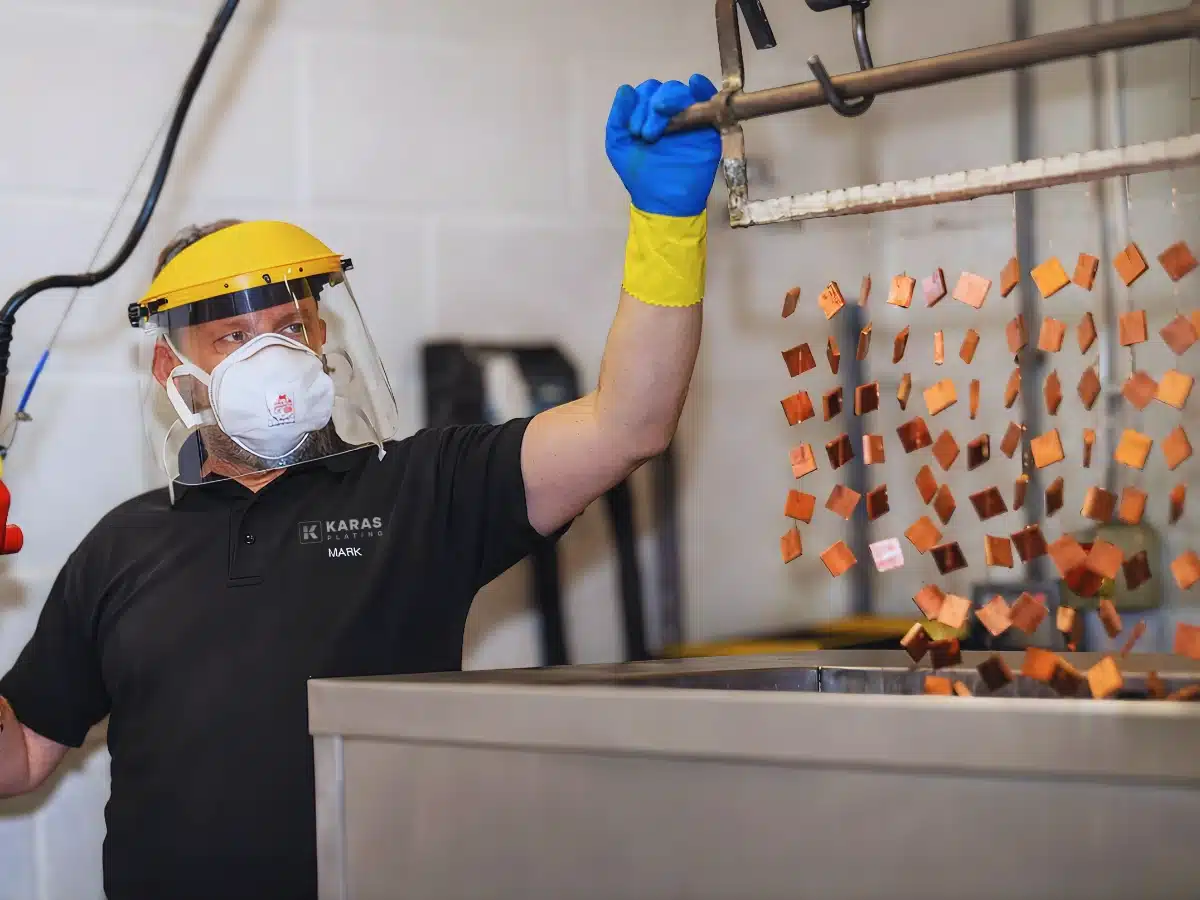
Industrial electroplating is the controlled application of a metallic coating onto a base material using an electrically driven process. While the underlying principles are the same as electroplating more generally, industrial electroplating is defined by its emphasis on performance rather than aesthetics.
Typical characteristics include:
- Functional surface enhancement rather than decorative finishes
- Application to engineered components and assemblies
- High or repeat production volumes
- Tight tolerances and controlled coating thickness
- Use in environments involving mechanical stress, heat, corrosion or electrical load
In industrial applications, the plated layer is not simply cosmetic. It must bond securely to the substrate, perform consistently over time, and support the overall function of the component. Poor adhesion, uneven thickness or surface defects can compromise performance and, in safety-critical applications, lead to failure.
For a detailed explanation of the electroplating process itself, see our guide on What Is Electroplating.

How Industrial Electroplating Supports Manufacturing
Industrial electroplating allows manufacturers to enhance the surface properties of components without the need to manufacture entire parts from expensive or specialist materials. By applying thin, controlled layers of metal, it is possible to achieve the required performance while managing cost and material availability.
This approach enables manufacturers to:
- Use cost-effective base metals such as carbon steel, copper or aluminium
- Improve corrosion resistance in aggressive or outdoor environments
- Enhance electrical and thermal conductivity where required
- Increase wear resistance and reduce friction
- Extend component lifespan and reduce maintenance or replacement
As a result, electroplating plays a key role in both high-volume production and specialist engineering applications.
Industrial Electroplating Processes

A range of electroplating processes are used in manufacturing, with the choice determined by performance requirements, substrate material and operating conditions.
Silver Plating
Silver plating provides exceptional electrical conductivity and low contact resistance. It is widely used in industrial applications such as switchgear, connectors and busbars, where efficient current transfer and long-term reliability are essential. Silver is often selected where performance requirements outweigh material cost considerations.
Gold Plating
Gold plating is used in industrial environments where consistent electrical performance and corrosion resistance are critical. Industrial gold plating is applied in thin, precisely controlled layers to connectors, contacts and components used in electronics, defence, medical devices and telecommunications. Gold’s resistance to oxidation ensures stable performance in applications where even minor signal degradation or corrosion could result in failure.
Nickel Plating
Nickel plating is valued for its hardness, wear resistance and corrosion protection. It is commonly used in aerospace, automotive, engineering and power generation applications where components are exposed to mechanical stress or harsh environments.
Zinc Plating and Passivates
Zinc plating provides sacrificial corrosion protection for components. It is widely used for fasteners, brackets and structural parts, particularly in applications exposed to moisture, salt or outdoor conditions.
Tin Plating
Tin plating provides a solderable, non-toxic finish. Its ductility makes it well suited to electrical and electronic components where reliable solder joints and consistent coverage are required.
Copper Plating
Copper plating provides excellent electrical and thermal conductivity and is often used as an undercoat to improve adhesion and surface smoothness prior to further plating. It also plays a functional role in electrical and electronic applications.
Each of these processes serves a specific purpose within industrial manufacturing, allowing electroplating to be tailored precisely to technical requirements.
Industrial Electroplating Techniques

The method used to apply electroplating depends on component size, geometry and production volume.
Barrel Plating
Barrel plating is used for large quantities of small, robust components such as fasteners, screws and pins. Parts are placed in a rotating barrel immersed in the plating solution, allowing efficient, uniform coverage at high throughput.
Rack Plating
Rack plating is suitable for larger, more delicate or complex components that require individual handling. Components are mounted on racks to ensure secure electrical contact and consistent coating across intricate geometries.
Brush Plating
Brush plating is used for localised plating, refurbishment or repair work. It allows plating to be applied only where needed and is particularly useful for oversized components or in-situ repairs.
Heavy build coatings
High-build electroplating involves depositing significantly thicker metal layers than those used in standard commercial applications. This approach is used in demanding industrial environments where components are exposed to chemical attack, mechanical wear or high electrical loads. Heavy build coatings are commonly specified in sectors such as defence, oil and gas, medical technology and power generation, where durability, reliability and pore-free surfaces are essential.
Automated Production Plating Lines
Automated plating lines integrate cleaning, plating and rinsing under tightly controlled conditions. These systems are increasingly important in industrial environments where consistency, repeatability and efficiency are critical, particularly for high-volume production.
Industrial Applications of Electroplating
Industrial electroplating is used across a wide range of manufacturing sectors.
Aerospace
Aerospace components are exposed to extreme temperatures, mechanical stress and corrosive environments. Electroplated coatings improve wear resistance, conductivity and reliability in flight-critical applications.
Automotive and Electrification
In automotive manufacturing, electroplating protects components subject to vibration, moisture and temperature variation. As electrification increases, electroplating also supports electrical systems, battery assemblies and power distribution.
Defence
In the defence sector, electroplated coatings are used on equipment that must perform reliably in harsh and unpredictable conditions. Durability, corrosion resistance and electrical performance are essential across land, naval and aerospace systems.
Electronics
Electronics electroplating underpins the manufacture of connectors, contacts and circuit assemblies. Consistent conductivity, solderability and resistance to oxidation are critical to long-term electronic performance.
Electrical and Power Distribution
Electrical components such as busbars, connectors and switchgear rely on electroplating to improve conductivity and reduce energy loss. Protective coatings also guard against corrosion in critical infrastructure. These requirements are particularly relevant in environments such as data centres, where low resistance, reliability and thermal performance are critical.
Rail and Transportation
Rail and transport networks use electroplated components to withstand outdoor exposure, vibration and heavy use. Electroplating extends service life and reduces maintenance requirements across infrastructure and rolling stock.
Telecommunications
Telecommunications systems depend on electroplated connectors and contacts to maintain signal integrity. Gold and silver coatings ensure consistent performance over long service lifetimes.
Power Generation
In power generation environments, electroplating is used to protect components exposed to heat, load and corrosive conditions, helping to reduce downtime and support continuous operation.
Oil and Gas
Electroplating helps protect components used in highly aggressive environments like in the oil and gas industry, improving corrosion resistance and durability while reducing the risk of premature failure.
Benefits of Industrial Electroplating
Electroplating delivers a range of functional benefits for manufacturers:
Improved durability
Industrial electroplating produces wear-resistant surface layers that protect components from friction, abrasion and mechanical stress. This is particularly important in manufacturing environments where parts are subjected to repeated use, vibration or load over long service periods.
Corrosion protection
Electroplated coatings provide an effective barrier against moisture, chemicals and environmental exposure. In harsh or outdoor environments, sacrificial and protective coatings help prevent premature failure and extend the working life of steel and other base materials.
Enhanced electrical performance
Metals such as silver, copper and gold improve conductivity when applied through electroplating. This ensures efficient power and signal transmission in applications such as connectors, contacts, busbars and switchgear, where reliability is critical.
Cost efficiency
By combining affordable base materials with high-performance surface coatings, electroplating allows manufacturers to achieve the required performance without the cost of producing entire components from specialist metals. This approach supports both performance and commercial efficiency.
Consistency at scale
Industrial electroplating is well suited to high-volume production. With controlled processes and appropriate automation, manufacturers can achieve consistent coating thickness, adhesion and finish across large production runs, supporting quality assurance and repeatability
For further detail, see our article on The Benefits of Electroplating.
Quality Control and Compliance
Industrial electroplating requires strict control at every stage of the process. Bath chemistry, current density, temperature and plating time must be carefully managed to ensure consistent results across all components.
In the UK, electroplating operations are subject to strict environmental and regulatory controls. Karas operates under an Environmental Permit and complies with REACH and RoHS requirements. Accreditation to ISO 9001, ISO 14001 and ISO 45001 supports quality management, environmental responsibility and occupational health and safety.
Future Developments
While electroplating is a well-established process, it continues to evolve. Advances in automation, monitoring and process control are improving efficiency, consistency and sustainability across industrial operations.
Karas continues to invest in modern facilities, including automated silver plating lines and enhanced metal preparation capabilities. These developments strengthen capacity and support the growing demand for high-performance industrial electroplating.
For the latest updates, see our News page.
Why Manufacturers Choose Karas
Manufacturers require a plating partner that understands performance demands, compliance obligations and production realities. Karas brings decades of experience supporting customers across automotive, aerospace, defence, electronics, rail, medical and power generation sectors.
With a wide range of electroplating processes, automated capabilities and a strong focus on quality and environmental standards, Karas delivers reliable industrial electroplating solutions for demanding manufacturing applications.
Discuss Your Industrial Electroplating Requirements
Looking for a dependable electroplating partner for all your industrial requirements? Contact our expert team to discuss your application, performance requirements and production needs.