





Electroplating is vital in today’s data centres, enabling components to meet the performance and durability requirements needed for uninterrupted power supply, uptime, and operational efficiency.
For data centres to run efficiently, they depend on grey space supporting infrastructure. This infrastructure is critical to how the data centre remains functional and operational.
In hyperscale applications, grey space environments are less tightly controlled than white space resulting in a harsh environment with wider swings in temperature, humidity, and airborne contaminants, especially around mechanical plant and power equipment.
The Intersection of Design and Longevity
However, when it comes to data centre design, considerations must be made for accessibility, maintenance, and durability. This is where surface finishing processes such as electroplating play an important role, as these processes enhance components and extend durability, making them ideal for parts used in this environment.

Harsh environment
The grey space environment is separate from the white space environment, which results in very different conditions. It is removed from the highly controlled, clean environment of the white space, with its server racks, LEDs, and IT equipment, and instead houses power and cooling infrastructure such as UPS systems, switchgear, transformers, generators, and cooling plant.
As a result, grey space areas can experience elevated temperatures, local hot spots, and, in some locations, higher humidity and airborne contamination compared with the white space.
These conditions are favourable to corrosion, oxidation and contamination of exposed metalwork, which can reduce component life, impact performance and functionality, and increase the risk of arcing, electrical shock and equipment failure. Parts operating in this environment often require electroplating to improve resistance to corrosion and oxidation, helping to keep components operational for longer while maintaining consistent performance.
Power distribution and coatings
Hyperscalers operate with efficiency in mind, thus, hyperscale data centres tend to be more compact than traditional facilities, meaning space is at a premium, and there is a clear trend towards compact, high-density power distribution architectures.
Whereas before suppliers and designers depended solely on heavy cabling, components such as busbars, busway systems, power distribution bars, switchgear contacts, terminals, lugs, and high‑current connectors are widely used to move power efficiently through the grey space. For these components to operate optimally over time, electroplating is used to reduce the risk of corrosion, minimise contact resistance, and control performance degradation.
Additionally, traditional unprotected terminations and bare copper have progressively been replaced by plated busbars, plated contacts, and engineered high‑current connectors that offer improved space efficiency, reliability, and resistance to grey space conditions.
Barrier & sacrificial coatings
Many hyperscalers rely on barrier and sacrificial coatings to bear the demanding environments and improve performance and longevity. Barrier plating processes, such as nickel or tin layers on copper or aluminium, protect the substrate base metal by isolating it from the environment.
When it comes to sacrificial processes, the coating is designed to corrode in preference to the base metal, preserving the integrity of the underlying component. Common surface finishes used for this purpose include zinc and zinc-nickel, both widely applied as sacrificial coatings in electrical and industrial applications.
Types of components
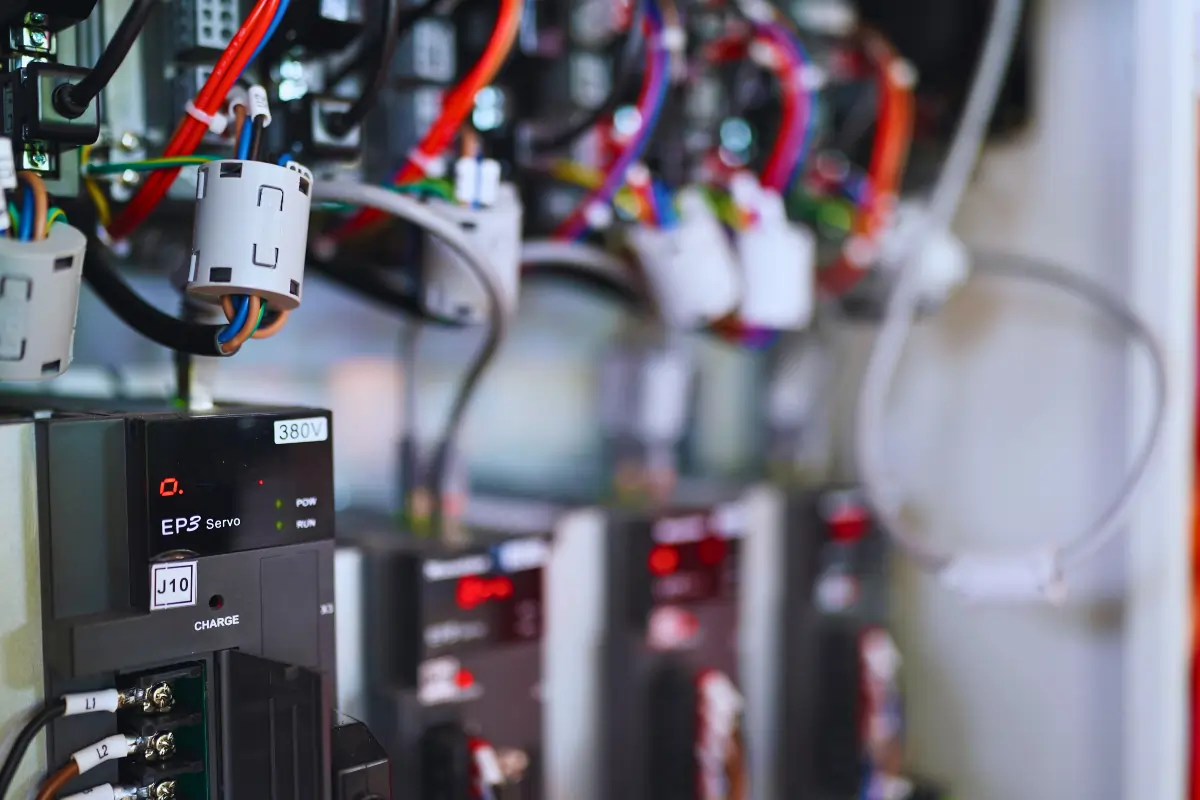
In the data centre grey space environment, there is a lot of medium‑voltage and low‑voltage distribution equipment such as switchgear, busbars, busway, transformers, generators, UPS systems, cooling towers, and associated control systems. While the white space environment typically contains a much higher overall number of electroplated items (for example, PCB connectors, server contacts, and networking hardware), grey space components tend to be physically larger and carry much higher currents.
Consequently, the above are often among the largest individual plated components within a data centre’s electrical infrastructure, particularly for conductors, switchgear contacts, terminations, power connections, and plated connectors. Parts in the grey space rely on carefully specified plating processes to maintain low resistance, manage heat, and withstand long service lives under continuous load.
This restores their surface and extends their service life. We offer a quality refurbishment process which includes key stages:
High current
Medium and high‑voltage applications in data centres and hyperscale facilities use significant amounts of electricity at high current. Electroplating critical components with metals such as silver helps enhance conductivity at contact interfaces, enabling them to handle high current loads more effectively and reducing energy losses which is key for data centre performance.
Arcing and contact erosion are major concerns in the grey space environment, especially in switchgear, breakers, and high‑current connectors.
Silver electroplating and silver‑alloy contact surfaces are recommended and widely used on power contacts because they combine excellent electrical conductivity with good arc‑erosion behaviour, while nickel and tin underlayers or topcoats protect the underlying copper or aluminium and help stabilise contact resistance.
Gold plating is more commonly used on signal and control connectors rather than on high‑energy power contacts, providing very stable, low‑resistance connections and outstanding corrosion resistance where reliable low‑level signals are critical, such as in high‑speed networking and control interfaces. Is it fair to say, this will be used in white space.
Reduced wear
Hyperscale and data centre requirements are constantly changing, with innovation, ongoing maintenance, upgrades, and capacity expansions required over time. With the development of modular systems, such as modular UPS, plug‑in busway tap‑off units, and slide‑in switchgear sections, components and equipment are frequently inserted, removed, and repositioned, making mechanical wear on contact surfaces a key issue.
To improve wear resistance, protect against fretting and mechanical damage, nickel plating and tin plating are two of the most suitable processes. The benefit of these are more durable components that can withstand repeated handling and installation.
In many connector and busbar systems, combinations of nickel underlayers with tin or precious‑metal topcoats are used to balance wear resistance, conductivity, and cost.