


Plating solar components: Use of electroplating in the solar industry
Electroplating plays a critical role in the manufacture of solar cells and modules, particularly in the creation of low-resistance metal contacts and busbars. As manufacturers push for higher efficiency, lower shading losses, and tighter cost control, the performance and consistency of plated layers have become increasingly important.
This is especially true as the industry shifts away from traditional silver pastes towards electroplating processes like copper, nickel and silver. While these approaches reduce material costs, they also place greater demands on plating quality, adhesion, thickness control, and long-term reliability.
Silver remains central to solar component plating. Despite ongoing efforts to reduce usage, the solar industry still accounts for around one-tenth of global silver demand, underlining how dependent PV performance remains on well-engineered plated surfaces.

In this article, we look at how electroplating is used in solar component manufacturing, why plating quality matters as metallisation methods evolve, and what manufacturers need to consider when specifying plated finishes for solar applications.
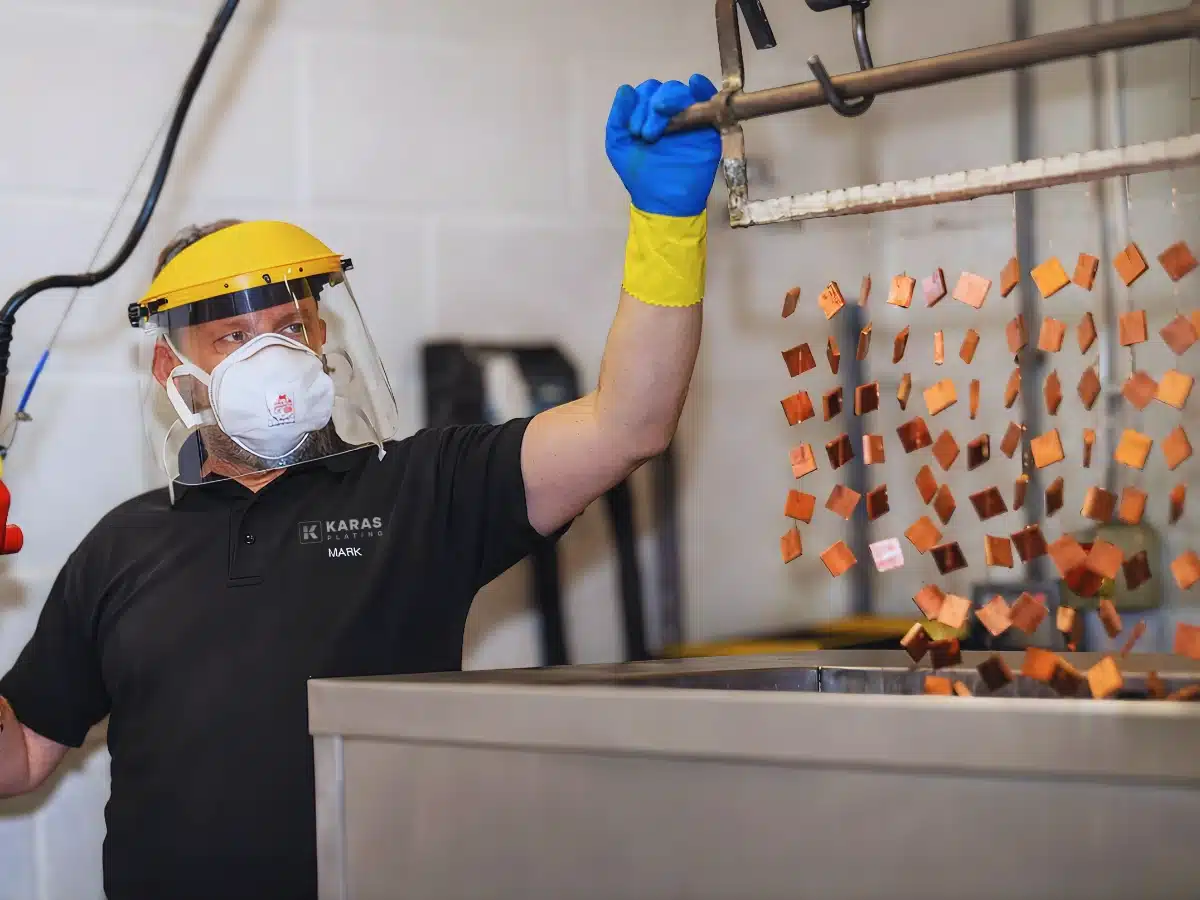
At Karas Plating, we offer electroplating for a wide range of components that are used in solar applications. These generally fall into two main areas:
- Electrical power infrastructure within PV plants, such as connectors, busbars, and switchgear
- Modular manufacturing, including metallisation of cells and interconnects
Components we plate and processes
Busbars
We understand that busbars are critical components of solar systems. They are used for high-current distribution and provide connections for batteries and DC equipment. We offer custom plating processes to support busbar plating solutions for the solar industry.
We have decades of experience providing high-quality busbar plating solutions for clients in the electrical and power generation sectors, including solar. This includes busbars manufactured from aluminium, copper, and copper-clad aluminium (CCA).
By choosing Karas for your busbar plating for solar applications, you gain access to a wide range of finishes, including silver electroplating, nickel plating, tin plating, and gold plating. Each project is supported by a personalised plating plan, as no two requirements are identical and product ranges vary significantly.
Back contacts
Back contacts are crucial to the efficiency of solar panels. They reduce the shadow cast on the solar cell, resulting in improved overall system efficiency.
For high-quality back contacts, nickel and copper plating solutions can be relied upon to deliver excellent corrosion resistance. These processes meet the electrical, mechanical, and long-term reliability requirements that alternative approaches often struggle to achieve. Without a nickel barrier, copper can diffuse into the underlying material, leading to increased resistance, degraded performance, and long-term failure.
Without a nickel diffusion barrier, copper can migrate into sensitive layers such as silicon and dielectrics, increasing resistance, degrading performance, and risking premature failure.
Battery connectors
Connectors are a very important part of PV and solar systems, as they ensure strong and secure electrical connections between inverters, batteries, solar panels, and other equipment. This minimises energy loss, helps maintain a stable power flow, and prevents excess heat at connection points, which can cause damage and pose a fire risk.
Solar battery connectors are often exposed to the elements. Due to the environmental conditions in which solar panels operate, connectors are at increased risk of corrosion. This is often seen as a build-up of blue, green, or white residue on battery terminals and connections.
For battery connectors, nickel, tin, and copper plating processes are often the most appropriate, as they provide good protection against corrosion and improve the durability of both connectors and overall systems.
Cell contacts
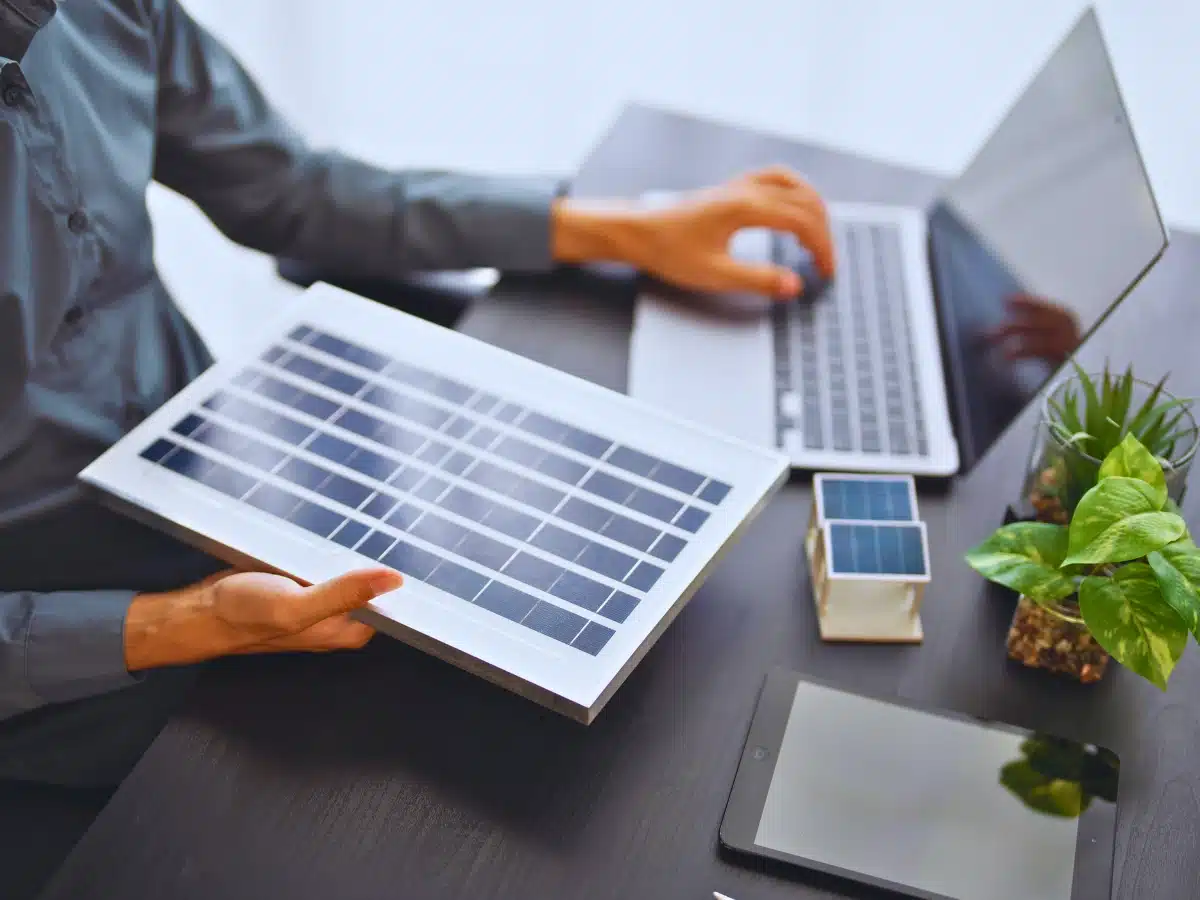
Solar cell contacts collect the electrical current generated when sunlight strikes the photovoltaic material. Due to their operating environment, electroplating enhances contact conductivity, supporting high efficiency and minimal energy loss. It also improves the conductivity of the current‑carrying tracks and terminations, forming reliable connections between silver, copper and silicon‑based components.
We offer high-quality plating services that help reduce the risk of common electroplating issues, such as copper diffusion. Copper diffusion refers to the movement of copper atoms into other materials (such as aluminium, silicon, dielectrics, or epoxy), or within copper itself, driven by temperature, pressure, or electric fields.
For conductive components like busbars and cell contacts, electroplating also enables designers to use cost‑effective copper conductors with thin layers of silver, nickel or tin, rather than bulk precious metals, maintaining performance while significantly reducing material cost. This helps keep solar equipment affordable and increases the solar adoption rate.
Connectors
In solar panels, connectors play a vital role in bringing systems together, transferring generated electricity to inverters, linking panels together, and connecting to components such as batteries. Electroplating protects connector surfaces from corrosion. In addition, plating increases electrical conductivity, helps prevent short circuits, and improves solderability. This is why plating is essential for solar panel connectors.
With a long history of electroplating connectors, we are able to provide high-quality gold plating for connectors and fasteners. Gold plating is one of the most conductive finishes available and also offers excellent corrosion protection. Some customers opt for silver plating, which offers superior conductivity to gold at a lower cost. From a budget perspective, tin plating improves solderability. Nickel plating is commonly used as an underlayer to protect the base metal, prevent corrosion, and stop solder wicking.
For all connector applications, please do not hesitate to contact us. Our team is highly experienced in plating processes and well placed to advise on the most suitable solution for your specific application, including the environment in which your connectors will operate.
We can also advise on reducing the risk of corrosion by adding suitable barriers or undercoats, helping to prevent damage to the base metal, whisker growth, and solid-state diffusion.
Metal frames and mounting hardware
For metal frames used in solar applications, durability is of critical importance, ensuring that panels and associated components remain secure over long periods. As solar panels are long-term investments, frame durability directly affects overall product quality.
Electroplated steel and aluminium hardware offers strong corrosion resistance and durability, helping solar frames and mounting systems withstand weather, wind and temperature cycling over decades in the field.”
Solder pads
Solder pads play a key role in connecting metal tabbing, such as busbars, to solar cells. Secure bonding of interconnections is essential, as solder and flux create a metallurgical bond between tinned copper ribbons and the silver or aluminium pads on the solar cells. To further improve solderability and reliability, silver and tin plating are commonly used.
If you’re interested in how electroplating supports renewable energy applications, including solar panels, you can read more in our article on a fossil fuel–free future