


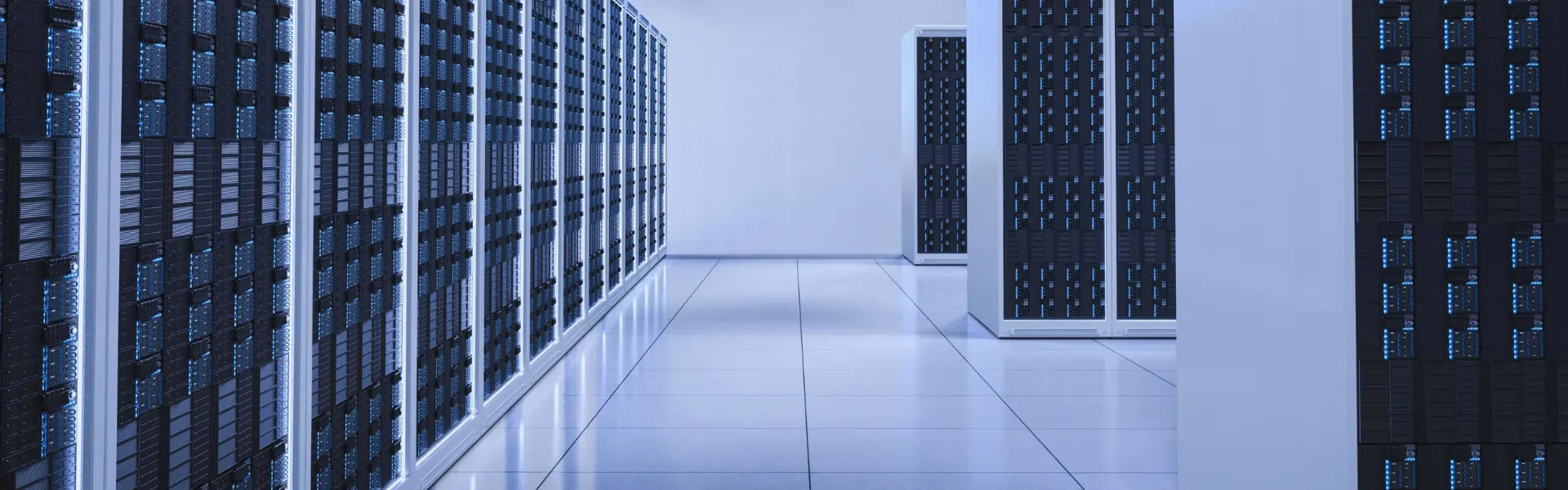
Data Centre White Space: Equipment, Materials, Surface Treatments and Performance Demands


White space, when it comes to data centres, refers to the area that contains the IT equipment, racks, and associated power distribution and cooling infrastructure used to run revenue‑generating compute and storage workloads. This is the “brains” of the operation.
This “data hall” is the primary environment where careful management of space, power, and cooling is required to maximise efficiency and performance while keeping operational costs under control

What Equipment and Materials Are Used
There is a vast array of technologies in white space applications. These will include:
Equipment
In most white space applications, you would expect to find storage systems, cabinets and racks, servers, networking equipment, cable management systems, in‑row or perimeter cooling units, and power distribution equipment such as rack PDUs, uninterruptible power supply (UPS) systems, and overhead or underfloor busway systems.
These systems create the final connection between the facility power and cooling infrastructure in the grey space and the IT load in the white space.
In many hyperscale facilities, there is close technical coordination between grey and white spaces to achieve high efficiency, covering power paths (from UPS and switchgear through PDUs and busways), airflow and cooling capacity, and monitoring and controls. While large central UPS systems and main switchgear are typically located in grey space, their outputs feed PDUs, RPPs and busways that sit at the interface with the white space and directly supply IT equipment.

Materials
White space infrastructure uses a range of engineered materials, including steel for racks and support structures, copper and aluminium for conductors and busbars, and lithium‑based chemistries in battery systems for UPS and energy storage. Copper is particularly important for power distribution, grounding, and the internal layers of PCBs, while aluminium is increasingly used for certain busbars, chassis, and thermal components where weight and cost are key considerations. Other alloys and coatings are selected to provide mechanical strength, corrosion resistance, and stable electrical performance over the life of the facility.
White space infrastructure uses a range of engineered materials, including steel for racks and support structures, copper and aluminium for conductors and busbars, and lithium‑based chemistries in battery systems for UPS and energy storage. Copper is particularly important for power distribution, grounding, and the internal layers of PCBs, while aluminium is increasingly used for certain busbars, chassis, and thermal components where weight and cost are key considerations. Other alloys and coatings are selected to provide mechanical strength, corrosion resistance, and stable electrical performance over the life of the facility.
Copper and Aluminium in Hyperscale & Modern Data Centres
Copper and aluminium are both used in hyperscale/modern data centres, in various areas of the electrical architecture; copper where space, voltage drop, and connection stability are critical, and aluminium where large-scale distribution, weight, and cost dominate.
Copper
In terms of materials, one of the most commonly used is copper. Copper is critical to both conventional and hyperscale data centres because of its high electrical conductivity and extensive use in power distribution, cabling, and electronics. It remains the default material of choice for many busbars, cables, connectors, and PCB traces in most current setups.
Copper supports the rapid growth of artificial intelligence, which is expanding significantly. According to the Copper Development Association, in a recent article in Forbes:
“A conventional data centre uses between 5,000 and 15,000 tons of copper. A hyperscale data centre, on the other hand — the kind being built to run artificial intelligence (AI) — can require up to 50,000 tons of copper per facility.” – 2025
These figures highlight how (artificial intelligence) AI is increasing copper demand.
Aluminium
Aluminium is another material used in the growth of hyperscale facilities and AI data centres. Increasingly, as data centre owners, manufacturers, and R&D teams look to reduce weight, cost and increase thermal management, aluminium busbars are becoming a growing alternative to copper.
The Role of Surface Finishing in Data Centre White Space
Unlike the largely back‑of‑house grey space environment, white space is more strictly controlled and secured, with tight requirements on access, cleanliness, airflow and environmental performance, even though both zones must still comply with stringent electrical and safety standards. It is critical and must be carefully managed
There is a need for environmental control systems to manage temperatures, humidity, and airflow conditions in order to support optimal IT equipment performance and protect sensitive electronics.
Whilst the flooring, buildings, and structure may not directly benefit from surface finishing itself, as they rely on coatings and tiles. This is not the case for the hardware located within the data centre white space. Hardware depends heavily on metallic surface finishes.
Surface finishing techniques such as electroplating play a key role in the performance, safety, reliability, and functionality of power‑distribution components, interconnects, and structural hardware used in white‑space infrastructure.
Thermal Performance
In this tightly controlled environment, heat management is extremely important. Components not only need to be electrically conductive, but they must also support efficient heat dissipation so that high‑density racks can operate within their thermal margin.
As a result, components such as electronic assemblies, PCBs, heat spreaders, and high‑current conductors often go through various surface treatment processes to maintain low contact resistance, support high current densities, and assist with local heat dissipation.
These finishes contribute to the stable thermal performance required in white space applications, particularly in AI‑heavy or high‑power deployments where power densities are rising.
Storage and Assembly
When considering the data centre white space environment, it is not just the active hardware and flooring that are important. Hardware must be mounted and stored in a manner that protects equipment, preserves airflow, and enables efficient maintenance and cable management.
In most data centre setups, you are likely to find racks, metalwork, cable trays, brackets, and steel structures used to store hardware. However, these require metal finishing treatments such as nickel undercoats and zinc plating to provide protection against corrosion and increased wear resistance, especially where movement occurs. This is particularly important in such a controlled environment.
In most data‑centre white space setups, racks, cable trays, brackets, and steel support structures hold and route equipment and cabling. These metal components often receive finishes such as zinc plating, nickel undercoats, or other protective coatings to improve corrosion resistance and wear performance, especially where there is movement, vibration, or frequent reconfiguration.
Such finishes help maintain mechanical integrity and minimise particulate generation in a controlled environment, supporting long‑term reliability and cleanliness.
Power Distribution
As already discussed, power distribution is one of the most important functions of data‑centre white space infrastructure. Within or adjacent to the white space, systems such as busway, rack PDUs, overhead busbars, tap‑off boxes, and terminal assemblies are used to distribute power safely and efficiently to racks and IT loads.
Due to the nature of the environment, copper and aluminium busbars, power rails, and terminations are subject to oxidation, thermal cycling, and mechanical stress over time.
Manufacturers therefore apply electroplating processes such as tin, silver, or nickel to improve resistance to corrosion, maintain low and stable contact resistance, and support long‑term connection reliability, which is vital for uptime and maintenance planning. In high‑current or high‑reliability applications, silver or electroless nickel finishes can also enhance thermal stability and wear resistance under heavy loads.
Electrical Components
It is not just busbars and power distribution equipment that benefit from electroplating. A wide range of contacts, connectors, fasteners, patch panels and PCBs are also plated to enable smooth electrical flow, low and stable contact resistance, and reliable performance in the data centre environment.
Gold plating is often specified for high‑reliability signal connectors and contacts where excellent conductivity, very low and stable contact resistance, and long‑term signal integrity are required.
Tin plating is widely used on terminations, contacts, and busbars as a cost‑effective solution that offers good corrosion resistance and solderability, while nickel is frequently used as an underlayer to improve adhesion and barrier properties, and silver is chosen for certain high‑current or low‑loss power applications.
Conclusion
White space is a critical environment where reliability, performance, and precision are central to the return on investment (ROI) of the facility. Electroplated components used within this space are necessary to achieve the required levels of conductivity, corrosion protection, and long‑term stability, particularly as hyperscale facilities grow and AI workloads increase power density.
By combining appropriate electroplating finishes with components designed for the specific electrical, thermal, and environmental conditions of white space, data‑centre manufacturers and operators can improve reliability, support energy‑efficiency targets, and reduce unplanned maintenance over the life of the site.